 Pin it
 Last October, I found myself in the produce section on a crisp afternoon, overwhelmed by the season's bounty and my own wandering appetite. I grabbed butternut squash, Brussels sprouts, and a handful of other autumn treasures without a real plan, then drove home wondering what I'd actually make. That evening, as the oven warmed and the vegetables began to caramelize, I realized I was creating something that felt less like cooking and more like assembling the best parts of fall into a single bowl. My kitchen smelled like toasted grain and cinnamon, and suddenly everyone wanted to know what I was making.
I made this for a friend who'd just moved to the neighborhood, and watching her take that first spoonful told me everything. She closed her eyes, paused, then asked if I could teach her how to make it. We ended up cooking it together the following week, and I learned that when you share a recipe born from genuine exploration rather than following instructions rigidly, it becomes something people actually want to make again.
Ingredients
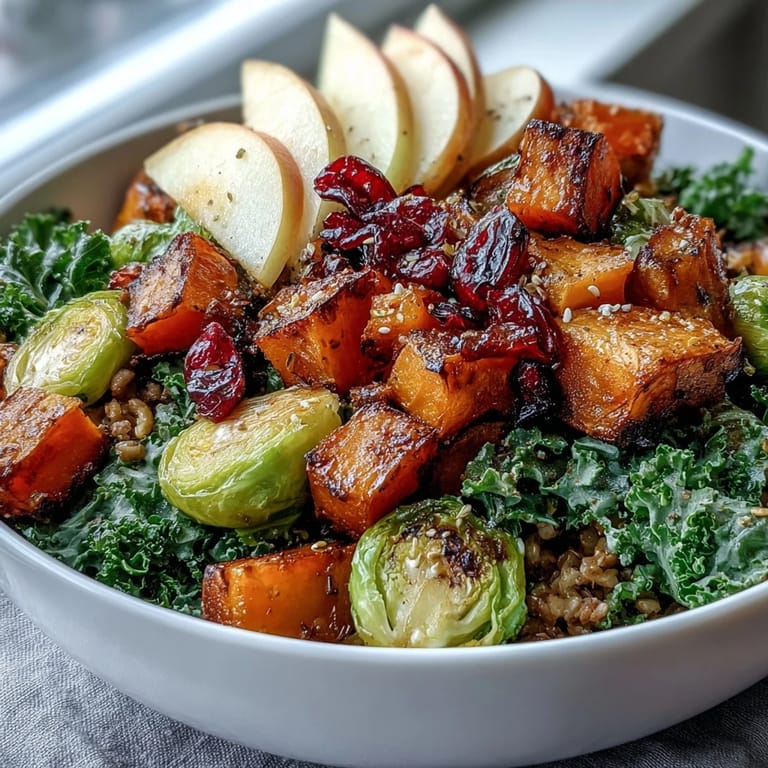
- Butternut squash, peeled and cubed (2 cups): Choose one that feels heavy for its size and has a deep orange hue; the roasting brings out its natural sweetness without any added sugar.
- Brussels sprouts, trimmed and halved (2 cups): Don't skip trimming the stem ends and removing damaged outer leaves—they roast more evenly and develop crispy, caramelized edges.
- Kale, stems removed and leaves chopped (2 cups): Tearing the leaves by hand rather than chopping them with a knife keeps them from bruising and maintains their texture when wilted.
- Apple, cored and sliced (1 large): A tart-sweet variety like Honeycrisp or Granny Smith balances the earthiness of the roasted vegetables beautifully.
- Farro or quinoa or brown rice (1 cup): Farro adds a lovely nutty chew, but quinoa works if you need gluten-free, and brown rice is always a reliable choice.
- Vegetable broth or water (2 cups): Broth adds depth, but water works fine if that's what you have—the roasted vegetables carry enough flavor on their own.
- Olive oil (3 tbsp): Divide it thoughtfully between the squash mixture, apples, and kale; this is where the magic happens.
- Sea salt, black pepper, smoked paprika, ground cinnamon: The smoked paprika adds a whisper of smokiness while the cinnamon echoes autumn without announcing itself loudly.
- Pumpkin seeds, dried cranberries, optional cheese (toppings): These finish the bowl with texture and bursts of flavor—skip them or go wild depending on your mood.
Tired of Takeout? 🥡
Get 10 meals you can make faster than delivery arrives. Seriously.
One email. No spam. Unsubscribe anytime.
Instructions
- Get your oven ready and prep your workspace:
- Preheat to 425°F and line two baking sheets with parchment paper so nothing sticks and cleanup becomes almost pleasant.
- Season and spread the squash and Brussels sprouts:
- Toss them in a bowl with 2 tablespoons olive oil, salt, pepper, and smoked paprika, making sure everything gets coated evenly, then spread them in a single layer where they'll have room to actually roast rather than steam.
- Prepare the apples separately:
- Arrange apple slices on the second sheet, drizzle with the remaining tablespoon of olive oil, and dust with cinnamon so they caramelize into something almost dessert-like.
- Let the oven do the work:
- Roast the squash and Brussels sprouts for 25 to 30 minutes, stirring once halfway through until they're golden and tender; roast the apples for about 15 minutes until they're soft and starting to turn jammy.
- Cook your grain while vegetables roast:
- Rinse the farro under cold water, then bring your broth to a boil, add the grain, reduce heat to low, cover, and let it simmer for 20 to 25 minutes until tender and the liquid is mostly absorbed.
- Wilt the kale with minimal fuss:
- While everything else finishes, heat a skillet over medium heat and add the chopped kale with just a splash of water, stirring for 2 to 3 minutes until it softens but still holds some character.
- Build your bowls with intention:
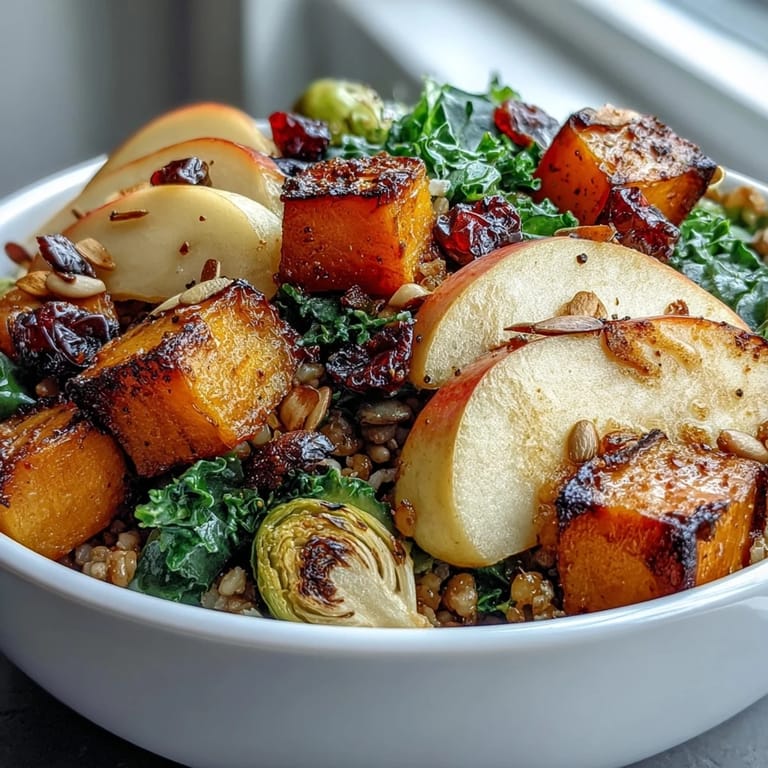
- Divide the cooked grain among four bowls as your base, then arrange the roasted vegetables, wilted kale, and caramelized apples on top so each bite has a little of everything.
- Finish with joy:
- Scatter pumpkin seeds, dried cranberries, and cheese if using over the top, letting people customize their own bowls if you're serving others.
 Pin it
 There's something about bringing people together around a bowl that feels different from a traditional plated meal. My grandmother called after I made this for a family gathering and asked me to write down the recipe, not because she needed instructions but because she wanted to remember the feeling of sitting around my kitchen table on a cool afternoon, passing bowls and talking about our week.
The Magic of Roasting
Roasting transforms ordinary fall vegetables into something almost caramelized and sweet, and it's honestly the secret to why this bowl feels so much more interesting than a basic salad. The high heat concentrates flavors and creates those crispy, browned edges that make your mouth actually want to be there. Once you understand how roasting works—giving vegetables room, decent oil, and patience—you'll find yourself throwing everything into the oven.
Grain Choices and Your Mood
I've made this bowl with farro when I want something chewy and substantial, quinoa when I'm feeding someone gluten-free and need something that cooks fast, and brown rice when I'm feeling like something more understated. Each grain absorbs the vegetables differently and changes the whole eating experience. Pay attention to which one you reach for—it often tells you something about what your body actually needs that day.
Customization Without Overthinking It
This bowl doesn't demand precision; it rewards curiosity and works with what you have. Swap the apples for pears if that's what's ripe, add roasted chickpeas or crumbled tofu if you want more protein, or throw in any other roasted vegetable that speaks to you. I've added roasted carrots, parsnips, even cauliflower, and every version has felt true to the original spirit of the dish.
- Keep the base of grain and roasted vegetables consistent, and let everything else be an adventure.
- Taste as you build each bowl and adjust seasonings if needed—a pinch more salt can wake everything up.
- Make this on a Sunday afternoon when you have time to enjoy the process, not rush through it.
 Pin it
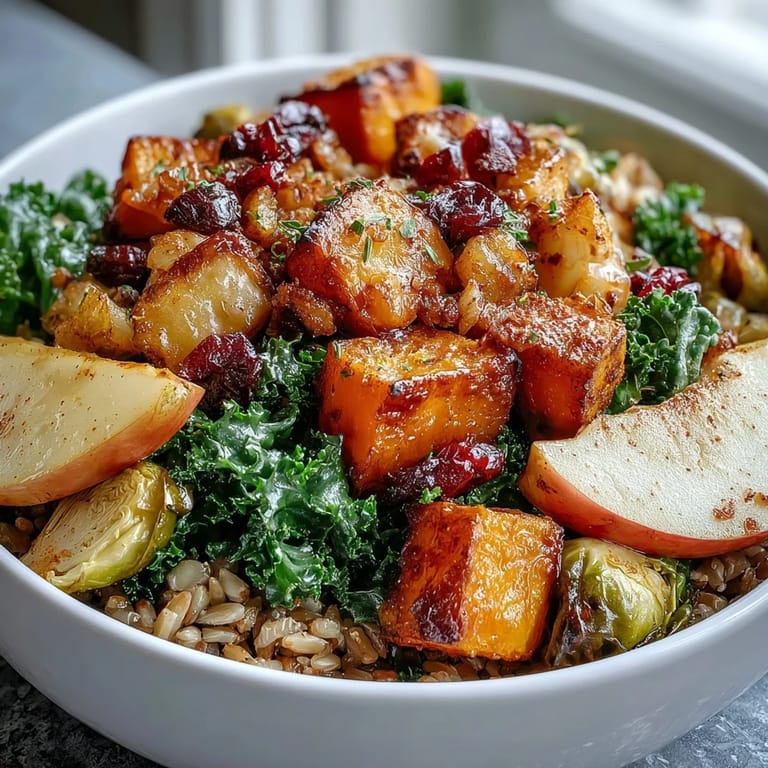
 This bowl became my answer to wanting something that felt both nourishing and exciting, proof that simple ingredients and a hot oven can create something worth coming home for. Make it when you need comfort, make it when you want to impress someone, or make it simply because autumn deserves to be tasted this way.
Recipe FAQ
- → Can I make this fall vegetable bowl gluten-free?
Absolutely. Simply substitute the farro with quinoa or brown rice, which are naturally gluten-free. The cooking time remains similar, though quinoa typically cooks faster in about 15-18 minutes.
- → How do I store leftovers?
Store components separately in airtight containers in the refrigerator for up to 4 days. Keep roasted vegetables, grains, and kale in separate containers to maintain texture. Reheat vegetables and grains in the oven or microwave, then add fresh kale just before serving.
- → What other grains work well in this bowl?
Beyond farro, try quinoa for a lighter option, brown rice for nutty flavor, or wheat berries for chewy texture. Each grain brings its own character while complementing the roasted autumn vegetables beautifully.
- → Can I add protein to make it more filling?
Yes. Roasted chickpeas, baked tofu, or seasoned tempeh work wonderfully. Simply roast chickpeas alongside the vegetables with similar seasoning, or pan-fry seasoned tofu cubes until golden and crispy on the outside.
- → What's the best way to roast the vegetables?
Spread squash and Brussels sprouts in a single layer on a large baking sheet without overcrowding. This ensures even roasting and caramelization. Roast at 425°F for 25-30 minutes, stirring halfway through, until vegetables are tender with golden edges.
- → Can I use different seasonal vegetables?
Certainly. Sweet potatoes, parsnips, carrots, or beets work well in place of or alongside butternut squash. For the Brussels sprouts, try roasted cauliflower or broccoli florets. Keep similar cooking times in mind when swapping vegetables.