 Pin it
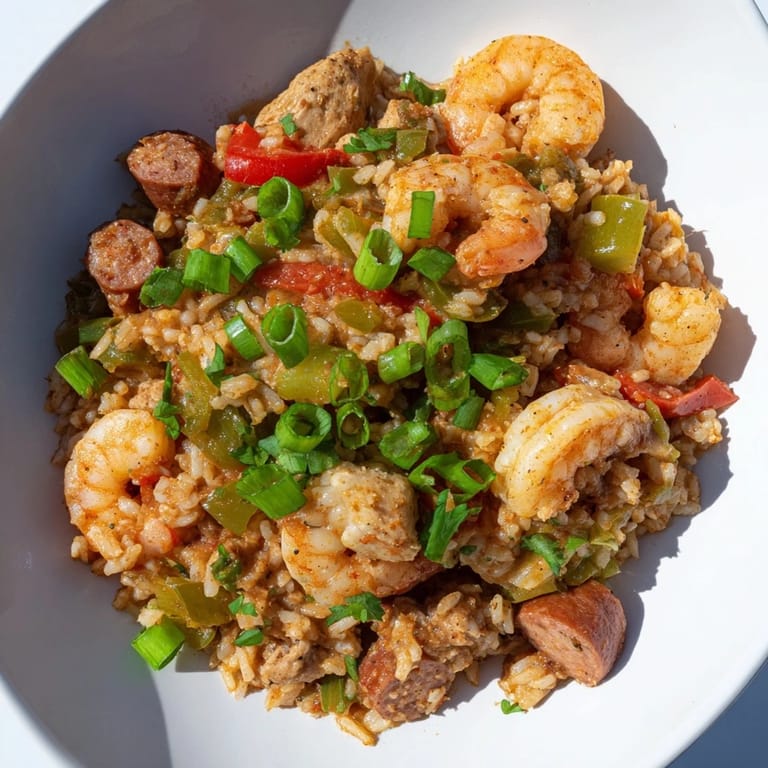
 My first real jambalaya came together by accident on a humid August evening when my neighbor dropped off a link of andouille sausage and wouldn't stop talking about the Holy Trinity of Creole cooking—onions, celery, and bell pepper. I had chicken in the freezer and shrimp at the market, so I figured why not throw it all into one pot and see what happened. That first bite, with the smoke from the sausage mingling with the heat of cayenne and the sweetness of tomatoes, made me understand why this dish has fed families and neighborhoods for generations.
The turning point for me was serving this at a casual dinner party where someone asked for seconds before finishing their first bowl. I remember standing at the stove, watching someone's face light up as they tasted it, and thinking: this is what good food does. It brings people together without requiring you to spend all day in the kitchen.
Ingredients
- Andouille sausage, 225 g (8 oz), sliced: This is the backbone of jambalaya's smoky depth; it renders its own fat into the pot, which becomes the base for everything else.
- Chicken thighs, 2 boneless skinless (about 250 g/9 oz), cut into 2 cm pieces: Dark meat stays tender and juicy through the long simmer, unlike breast meat which can turn stringy.
- Large raw shrimp, 225 g (8 oz), peeled and deveined: Add these near the end so they stay plump and don't turn rubbery from overcooking.
- Onion, 1 medium, diced: This is the first vegetable that hits the pot and becomes the sweet foundation of the sauce.
- Green bell pepper, 1, diced: It softens into the braise and adds a gentle vegetal note that balances the spice.
- Celery stalks, 2, diced: Along with onion and pepper, this completes the Holy Trinity that every Creole cook knows by heart.
- Garlic cloves, 3, minced: Add this after the soffritto vegetables, or it burns and tastes bitter.
- Canned diced tomatoes with juices, 1 can (400 g/14 oz): The acidity and moisture help balance the richness of the sausage and chicken fat.
- Spring onions, 2, sliced: A fresh, sharp garnish that cuts through the weight of the dish.
- Fresh parsley, 2 tbsp, chopped: Another bright finish that makes it feel alive on the plate.
- Long-grain white rice, 300 g (1½ cups), rinsed: Rinsing removes excess starch so each grain stays distinct instead of clumping together.
- Chicken broth, 720 ml (3 cups): Use homemade if you can; it makes a noticeable difference in the final flavor.
- Smoked paprika, 1½ tsp: This gives the dish its signature warmth and color without adding actual smoke.
- Dried thyme, 1 tsp: It's subtle but essential to the Creole flavor profile.
- Dried oregano, 1 tsp: Another layer of earthy complexity.
- Cayenne pepper, 1 tsp (adjust to taste): This is where the heat lives; start here and add more if you like fire.
- Black pepper, ½ tsp: Don't skip this even though cayenne is present; they work together, not against each other.
- Salt, 1 tsp plus more to taste: You'll taste-test as you go and likely need a pinch more once the shrimp goes in.
- Bay leaves, 2: They infuse the whole pot with a subtle piney note; remember to fish them out before serving.
- Vegetable oil, 2 tbsp: Neutral oil lets the spices and meats take center stage.
- Hot sauce, to serve (optional): For those who want to push the heat further.
Tired of Takeout? 🥡
Get 10 meals you can make faster than delivery arrives. Seriously.
One email. No spam. Unsubscribe anytime.
Instructions
- Brown the sausage:
- Heat 1 tablespoon of oil in a large, heavy pot over medium-high heat until it shimmers. Add the sausage slices and let them sear for 3–4 minutes without moving them around too much; you want them to caramelize and release their oils. This fond on the bottom of the pot becomes flavor gold.
- Sear the chicken:
- Add the remaining oil, then season your chicken pieces with salt and pepper before they hit the hot pot. Cook for 4–5 minutes, turning occasionally, until the outside is browned and crusty. You're not cooking it through; you're just building color and texture.
- Build the soffritto:
- Add onion, bell pepper, and celery, stirring often for about 5 minutes until they soften and release their sweetness. This is the base that holds everything together. Add minced garlic and cook for 1 more minute, just enough to turn fragrant.
- Toast the spices:
- Stir in the rice, paprika, thyme, oregano, cayenne, pepper, and salt, cooking for about 1 minute. You'll smell the spices wake up as they hit the hot oil; this step coats the rice and intensifies every flavor.
- Add liquid and simmer:
- Pour in the diced tomatoes with their juices and the chicken broth, scraping up any browned bits from the bottom of the pot with your spoon. Toss in the bay leaves, then return the sausage and chicken to the pot and bring it to a boil. Once it boils, reduce the heat to low, cover, and let it simmer undisturbed for about 20 minutes, stirring once halfway through.
- Finish with shrimp:
- Nestle the shrimp into the rice, cover again, and cook for 5–7 minutes until the shrimp turns pink and the rice is tender. The shrimp will continue to cook from residual heat even after you remove the pot from the fire.
- Rest and fluff:
- Remove from heat and discard the bay leaves. Use a fork to fluff the jambalaya gently, which separates the grains and helps any steam escape. This takes less than a minute but makes a difference in texture.
- Garnish and serve:
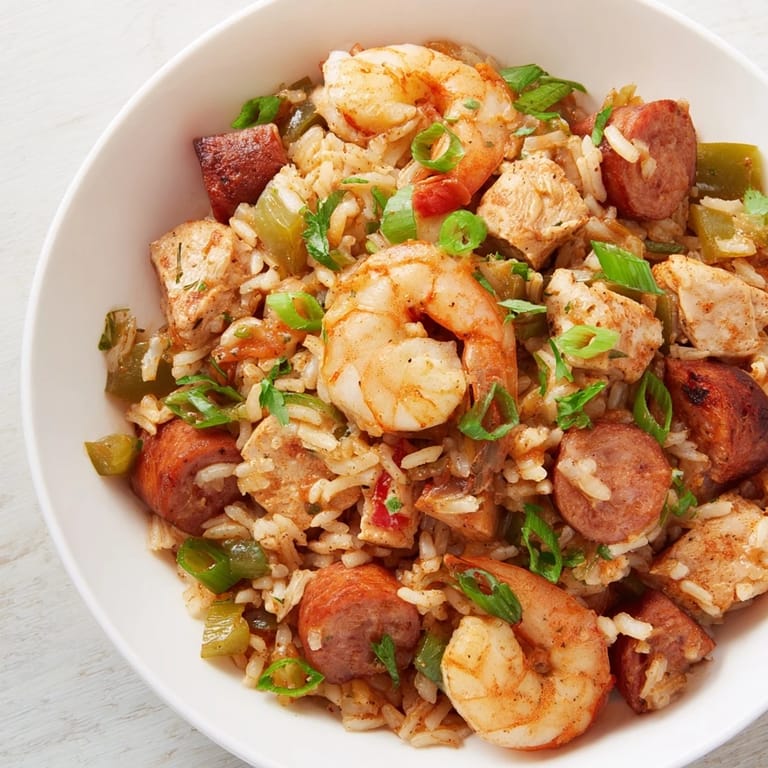
- Scatter spring onions and fresh parsley over the top just before serving. This adds a fresh, bright note that cuts through the richness and makes it feel less heavy.
 Pin it
 One afternoon, a friend watched me make this and asked why I didn't just throw everything in at once. I realized then that jambalaya isn't just a recipe; it's a lesson in patience and layering, about how nothing great happens all at once. Each step builds on the last, and the care you take in browning meat or toasting spices shows up in every spoonful.
Making It Your Own
Jambalaya thrives on flexibility, and the best versions are the ones cooks adapt to what's in their pantry or what they're craving that day. I've made it with smoked kielbasa when I couldn't find andouille, and the dish was still delicious—just with a slightly different character. If shellfish isn't your thing, double the chicken or add more vegetables like okra or diced carrots.
Heat Levels and Flavor Balance
The cayenne in this recipe is just a gentle wake-up call, not a shout. If you like heat, add an extra ½ teaspoon or more, or stir in some diced jalapeños for brightness along with the bell pepper. Some cooks splash in a dash of hot sauce at the end instead of before cooking, which lets people control their own heat level. The paprika is what gives jambalaya its color and warmth, so don't skimp on it or replace it with regular paprika, which lacks that crucial smokiness.
Serving and Storing
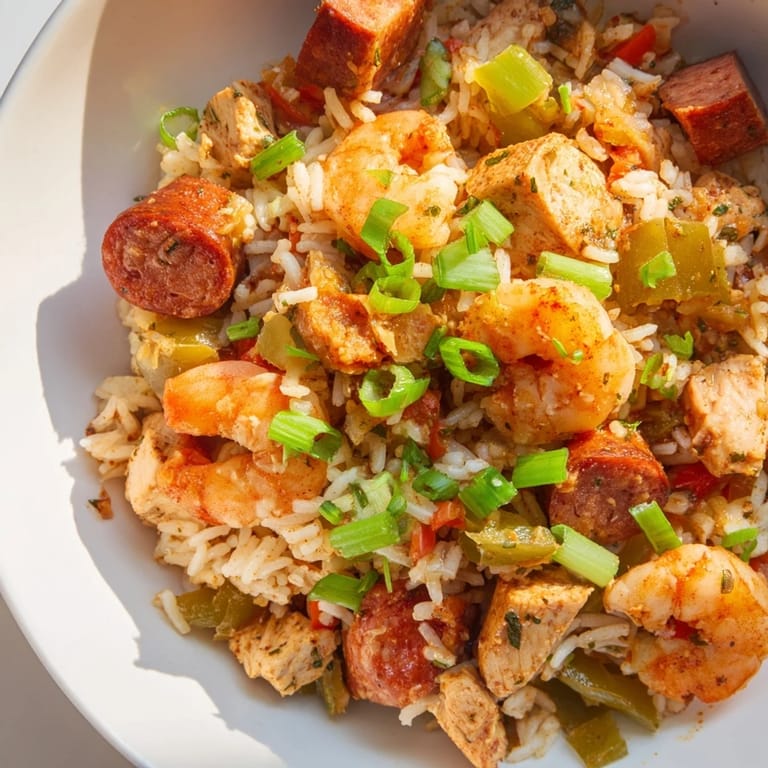
Jambalaya is best served hot, straight from the pot, with cornbread on the side or a simple green salad to cut through the richness. It also reheats beautifully the next day, and leftovers taste even deeper once the flavors have had time to get to know each other. Store it in the fridge for up to 3 days, and warm it gently on the stove with a splash of broth to loosen it back up.
- Leftover jambalaya makes an excellent lunch when stuffed into a crusty roll or served over a bed of greens.
- You can freeze it for up to 2 months; thaw it overnight in the fridge before reheating.
- If the rice absorbs too much liquid and becomes thick, add a bit more broth or water when you reheat it.
 Pin it
 This is the kind of dish that tastes like home, no matter where you're from. It feeds people, brings them back for seconds, and reminds us that some of the best meals come from throwing together good ingredients and letting them do their thing.
Recipe FAQ
- → What type of sausage works best in this dish?
Andouille sausage is traditional for its smoky flavor, but smoked kielbasa or chorizo are excellent substitutes.
- → Can I adjust the spice level?
Yes, increasing cayenne pepper or adding diced jalapeños can add extra heat to suit your taste.
- → Is it possible to omit shrimp?
Omitting shrimp still yields a flavorful meal focused on chicken and sausage.
- → What sides complement this dish well?
Cornbread or a fresh green salad pair nicely to complete the meal.
- → How should the rice be prepared to avoid clumping?
Rinse the long-grain white rice before cooking to remove excess starch for fluffy, separate grains.
- → Can I make this dish dairy-free?
Yes, this preparation is naturally dairy-free and focuses on bold spices and proteins.