 Pin it
 There's something about the smell of ribs slow-cooking in the oven that makes a Saturday afternoon feel like it's moving in slow motion, in the best way possible. Years ago, I learned that tender, fall-off-the-bone ribs aren't about rushing or high heat—they're about patience and a dry rub that actually sticks around. The first time I got this right, my kitchen smelled so good that neighbors casually wandered by asking what I was making. Now it's become the dish people ask for when they know I'm grilling, and honestly, I don't mind one bit.
I made these for a Fourth of July gathering where everyone assumed I'd been smoking ribs all morning, but the secret was those two and a half hours in a low oven while I sat on the porch with a cold drink. One guest asked for the recipe right at the table, sauce still on his chin, which is the highest compliment I've ever received. That's when I realized this recipe wasn't just about good food—it was about the kind of meal that brings people together and makes them feel taken care of.
Ingredients
- Pork or beef ribs (1.5–2 kg / 3–4 lbs): Choose ribs with good meat coverage and a bit of marbling; they'll stay juicier during the long, slow cooking.
- Olive oil (2 tbsp): This helps the dry rub cling to the meat and creates a beautiful crust.
- Brown sugar (2 tbsp): Adds caramel sweetness and helps the glaze stick during the final baking stage.
- Smoked paprika (1 tbsp): The real backbone of flavor here—don't skip it or use regular paprika instead.
- Garlic powder, onion powder, black pepper, salt (1 tsp each, plus 1 tsp salt): These build layers of savory depth that make every bite interesting.
- Cayenne pepper (½ tsp, optional): A whisper of heat that balances the sweetness without overpowering.
- Barbecue sauce (1 cup): Use something you actually love eating; this is your chance to pick a sauce that speaks to you.
- Honey (2 tbsp): Mellows the sauce and creates that glossy, sticky finish.
- Apple cider vinegar (1 tbsp): Cuts through the richness and adds a subtle tang that makes the sauce more complex.
Tired of Takeout? 🥡
Get 10 meals you can make faster than delivery arrives. Seriously.
One email. No spam. Unsubscribe anytime.
Instructions
- Get your oven ready and prep the ribs:
- Preheat to 150°C (300°F) and line a baking sheet with foil. Flip the ribs over and peel away that thin, papery membrane on the back—your teeth will thank you. Pat everything dry with paper towels so the rub has something to grip.
- Build the flavor base:
- Coat the ribs with olive oil, then mix your dry rub ingredients in a bowl and massage it all over both sides, getting into every nook. Don't be shy; this is where the magic starts.
- Let them slow-cook low and easy:
- Place ribs meat-side up on the sheet, cover tightly with foil, and slide into the oven for two to two and a half hours. You'll know they're ready when the meat pulls back from the bones and a fork slides through with almost no resistance.
- Make the glaze while they cook:
- Whisk together barbecue sauce, honey, and apple cider vinegar in a small bowl. Taste it; if it feels too thick, thin it out a bit more vinegar.
- Crank up the heat for that sticky finish:
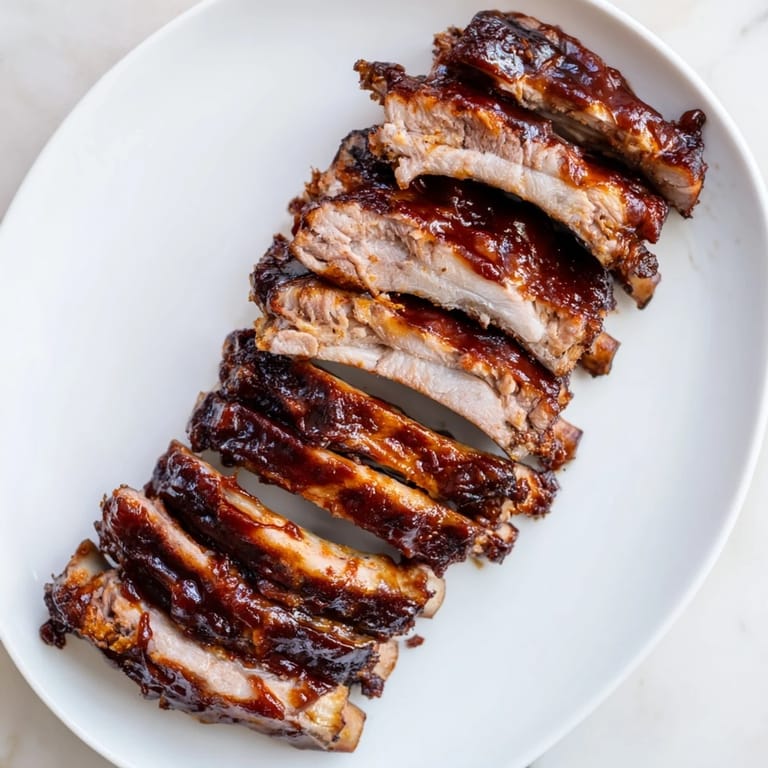
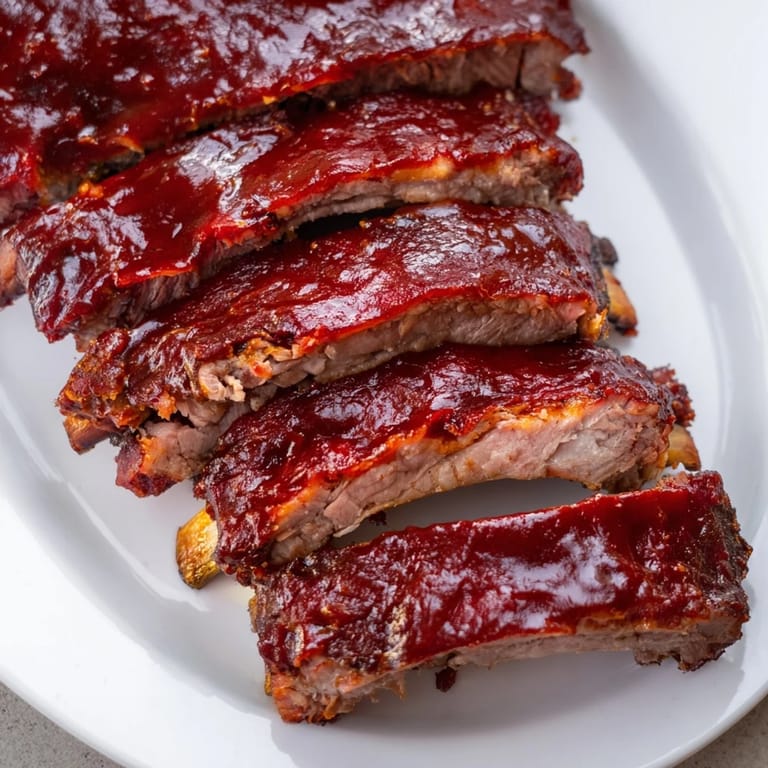
- Remove the foil and bump the oven temperature to 220°C (425°F), or move the ribs to a medium-high grill. Brush generously with the glaze, let them cook for ten to fifteen minutes, and baste once more halfway through until everything is caramelized and glossy.
- Rest and serve:
- Let the ribs sit for five minutes so all those juices redistribute. Cut between the bones with a sharp knife and set out extra sauce for people to drizzle as they like.
 Pin it
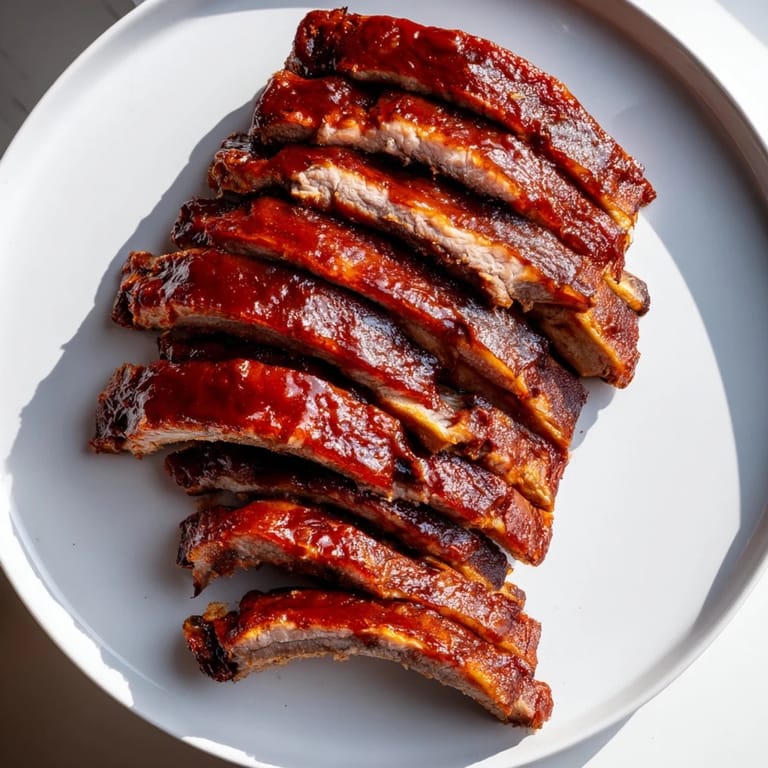
 My sister once said these ribs tasted like "the weekend felt," and that stuck with me. There's something about sitting down to a meal like this—where the meat is so tender it falls away clean and the sauce is still slightly warm—that makes everything else pause for a little while. Food this good does that.
Why Low and Slow Works
Cooking ribs at 150°C isn't boring or complicated; it's the secret to why they turn out so different from the rubbery versions you sometimes get. The low heat breaks down the collagen and connective tissue slowly and evenly, so the meat absorbs all those rub flavors instead of just sitting on the surface. I've tried higher temperatures to save time, and every time I regret it halfway through dinner. Patience really does pay off here.
The Glaze is Everything
That final step where you brush on the barbecue sauce and let it caramelize is where good ribs become the kind people remember. The honey and vinegar mixture does something magical—it keeps the sauce from drying out, adds complexity, and creates this gorgeous, sticky coating that clings to every bite. I once made a double batch of glaze by accident and didn't regret it one bit because everyone wanted extra.
Serving and Sides That Matter
Ribs this tender deserve company on the plate—coleslaw cuts through the richness perfectly, cornbread soaks up sauce like a dream, and baked beans add another layer of comfort. I've learned that the sides aren't afterthoughts; they're part of what makes the whole meal feel complete. You can also grill the ribs over indirect heat after they're tender from baking if you want that extra smoky flavor and a slightly charred edge.
- A cold drink and a simple green salad balance the richness beautifully.
- You can swap maple syrup for honey if that's what you have on hand.
- Always check the barbecue sauce label for allergens, especially if you're cooking for others.
 Pin it
 These ribs have become my go-to for any gathering where I want people to feel genuinely welcomed and cared for. There's real comfort in watching someone's face when they bite into meat that's this tender.
Recipe FAQ
- → How long should ribs be slow-cooked for tenderness?
Ribs need to be cooked at a low temperature for about 2 to 2½ hours to achieve fall-off-the-bone tenderness.
- → What is the purpose of the dry rub?
The dry rub adds depth and balance through spices like smoked paprika, garlic, and brown sugar, enhancing the ribs' natural flavor.
- → Can the ribs be grilled instead of using an oven?
Yes, after baking, ribs can be finished on a medium-high grill to add a smoky flavor and caramelized texture.
- → What alternatives are there for sweetening the barbecue glaze?
Honey is commonly used, but maple syrup can be substituted for a different sweetness profile.
- → How to ensure the ribs stay juicy and tender throughout cooking?
Coating ribs with olive oil and tightly covering them during slow cooking helps retain moisture and tenderness.