 Pin it
 My first real gumbo came together on a humid September evening when my neighbor dropped off a jar of homemade filé powder and a story about her grandmother's kitchen in New Orleans. She casually mentioned that the roux was everything, that patience with a wooden spoon was the only real ingredient that mattered. I was skeptical—it seemed like just flour and oil—but something in her certainty made me want to try. That first batch, honestly, was darker than I intended, almost burnt, but the flavor that emerged from it was so impossibly deep that I understood immediately why she'd emphasized it.
I made this for my book club once, tripling the recipe and staying up the night before to get the timing right. When the first ladle of gumbo hit the rice in each bowl, someone actually put their phone down mid-sentence and just ate in silence for a moment. That's when I knew this wasn't just dinner; it was the kind of food that makes people pause and be present.
Ingredients
- Andouille sausage: This smoky, spiced meat is the backbone of authentic gumbo—it seasons the entire pot as it cooks, so resist the urge to use something milder.
- Chicken thighs: They stay tender through the long simmer, unlike breasts, and add real depth to the broth.
- Medium shrimp: Optional but traditional; add them at the very end so they cook gently and stay plump.
- Onion, bell pepper, celery: This holy trinity is non-negotiable—the ratio and fine chopping matter because they meld into the roux and create the soul of the dish.
- Garlic: Mince it fresh; the timing of when it hits the hot roux makes a difference in how bright it stays.
- Tomatoes: Canned is fine, but drain them well so the gumbo doesn't become watery.
- Vegetable oil and all-purpose flour: Equal parts make a roux; the oil's neutral flavor won't compete with the deep browning you're after.
- Chicken or seafood stock: This is your foundation—taste it first, because a salty stock will change your seasoning calculations.
- Bay leaves, thyme, smoked paprika, cayenne: These build layers; don't skip the bay leaves, and taste as you go with the cayenne because heat preferences vary.
- Worcestershire sauce: A spoonful adds umami and a subtle tang that rounds everything out.
- Filé powder: Sprinkle it in at the end for authentic flavor and a gentle thickening—too early and it gets stringy and odd.
Tired of Takeout? 🥡
Get 10 meals you can make faster than delivery arrives. Seriously.
One email. No spam. Unsubscribe anytime.
Instructions
- Mise en place is your friend:
- Chop everything before you start, because once the roux is going, you cannot look away. I learned this by turning my back for thirty seconds and nearly ruining my first batch.
- Build the roux with intention:
- Heat oil in your pot over medium heat, then whisk in flour gradually, stirring constantly for 15 to 20 minutes. You're looking for a deep chocolate brown—darker than you think you need, but not black or burnt. The smell will shift from raw flour to toasted to almost nutty.
- Add the holy trinity:
- Once the roux reaches color, immediately add onion, bell pepper, and celery, stirring frequently for about 5 minutes. They'll soften and release their moisture, and the roux will cling to them beautifully.
- Bloom the garlic:
- Add minced garlic and cook for just 1 minute—long enough for it to become fragrant but not so long that it burns into bitterness.
- Brown the proteins:
- Stir in sausage and chicken, letting them sear for about 5 minutes. You're building flavor here, not cooking them through.
- Layer in tomatoes and seasonings:
- Add diced tomatoes, bay leaves, thyme, paprika, cayenne, salt, and black pepper. Stir everything together and let it sit for a moment so the spices bloom.
- Introduce the stock slowly:
- Pour in stock gradually while stirring to keep lumps from forming. Bring to a gentle boil, then lower the heat and simmer uncovered for 45 minutes, stirring now and then.
- Add shrimp at the last moment:
- If using shrimp, add them during the final 10 minutes so they cook just until pink and tender—overcooked shrimp turns rubbery fast.
- Finish with finesse:
- Stir in Worcestershire sauce and hot sauce, taste, and adjust salt and heat as needed. If you want extra thickening and flavor, sprinkle in a half teaspoon to a teaspoon of filé powder and stir well.
- Serve with ceremony:
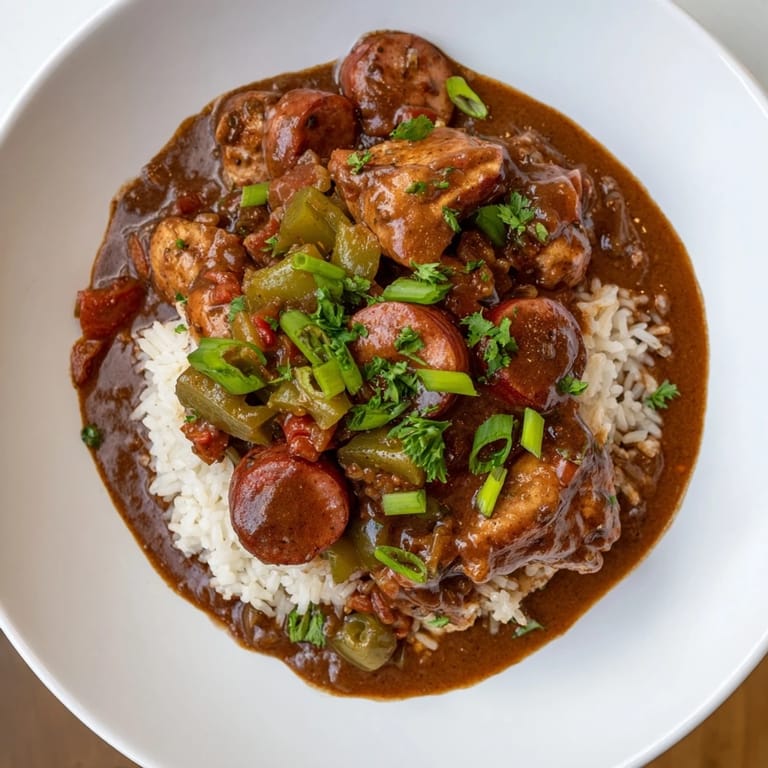
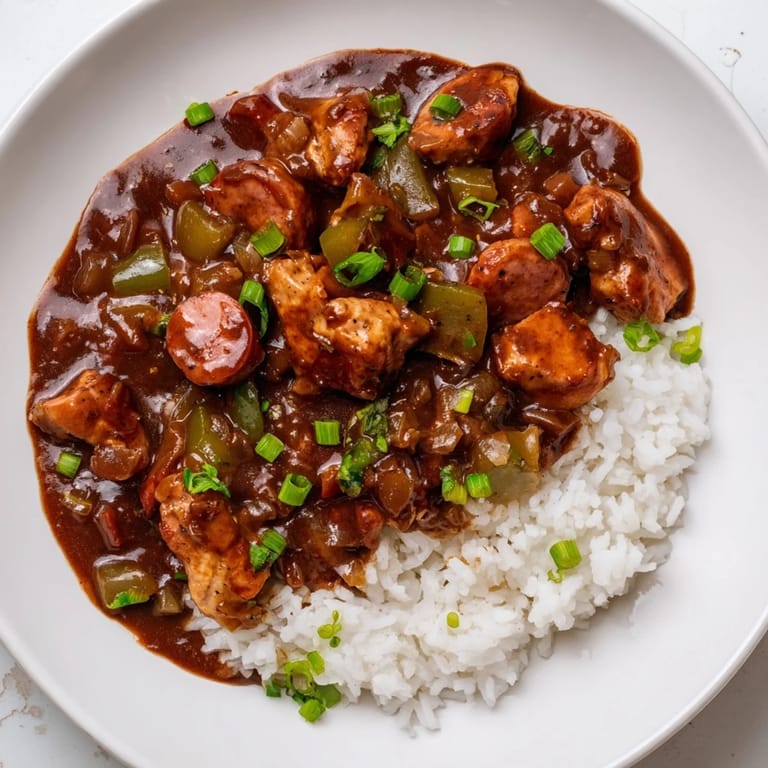
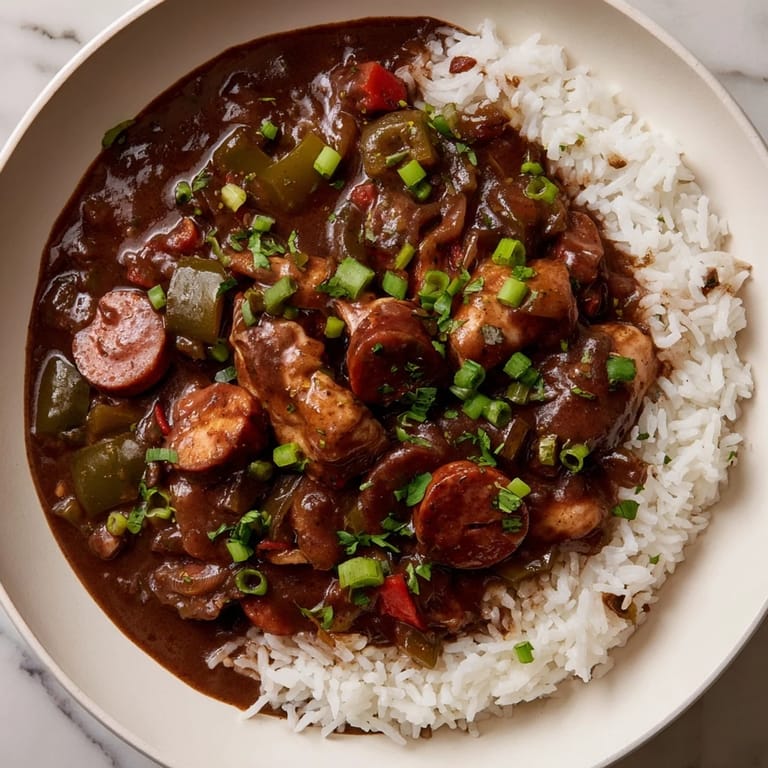
- Ladle the gumbo into bowls over fluffy rice and top with fresh scallions and parsley.
 Pin it
 The moment I understood gumbo wasn't a recipe but a conversation happened when my mom called mid-cook and told me about watching her mother make it in a cast-iron pot that never left the stove. I realized I wasn't just following steps; I was joining something generations old.
The Roux: Patient Magic
The roux is where gumbo either becomes legendary or mediocre, and the difference is time and attention. Too light, and the gumbo tastes thin and flat; too dark, and it tastes burnt no matter what you do next. That chocolate-brown stage is the sweet spot, and it demands you stand there, spoon in hand, for a solid 15 to 20 minutes without distraction. I used to resent this step until I realized the meditation of stirring was half the gift.
Variations and Swaps
Seafood-only gumbo skips the chicken and sausage entirely and relies on crab, oysters, shrimp, or fish for richness. A vegetarian version builds its depth from mushrooms, okra, and an extra helping of spices. The core is always the roux and the holy trinity; everything else bends to preference and what you have on hand. I once made gumbo with only sausage because we were out of chicken, and honestly, it was some of my best work.
Serving and Storage
Gumbo tastes better the next day after the flavors have melded overnight in the fridge. Reheat it gently on the stove with a splash of water if it's thickened too much. Serve over rice with hot sauce on the side and let everyone adjust the heat to their own liking. A crisp lager or chilled white wine pairs beautifully and cuts through the richness just right.
- Store gumbo in an airtight container for up to 4 days, or freeze for up to 3 months.
- Don't add filé powder before refrigerating; add it fresh each time you serve.
- If you're feeding a crowd, this recipe doubles easily and actually improves when you do.
 Pin it
 Gumbo is the kind of dish that makes you feel capable in the kitchen, like you've unlocked something real. Make it once and you'll make it again.
Recipe FAQ
- → What proteins are used in this Louisiana gumbo?
It includes andouille sausage, chicken thighs, and optionally shrimp for added seafood flavor.
- → How is the roux prepared for this dish?
The roux is made by slowly whisking flour into hot vegetable oil over medium heat, stirring constantly until a deep chocolate brown color develops.
- → Which vegetables form the base of the stew?
Onion, green bell pepper, and celery — known as the 'holy trinity' — create the aromatic vegetable base.
- → Can this dish be thickened naturally?
Yes, it can be thickened by adding filé powder (ground sassafras leaves) toward the end of cooking for texture and flavor.
- → What spices give this stew its distinct flavor?
Smoked paprika, cayenne pepper, bay leaves, thyme, and Worcestershire sauce combine for a rich, layered seasoning profile.
- → How is the stew traditionally served?
It is served hot over cooked long-grain white rice and garnished with sliced scallions and fresh parsley.