 Pin it
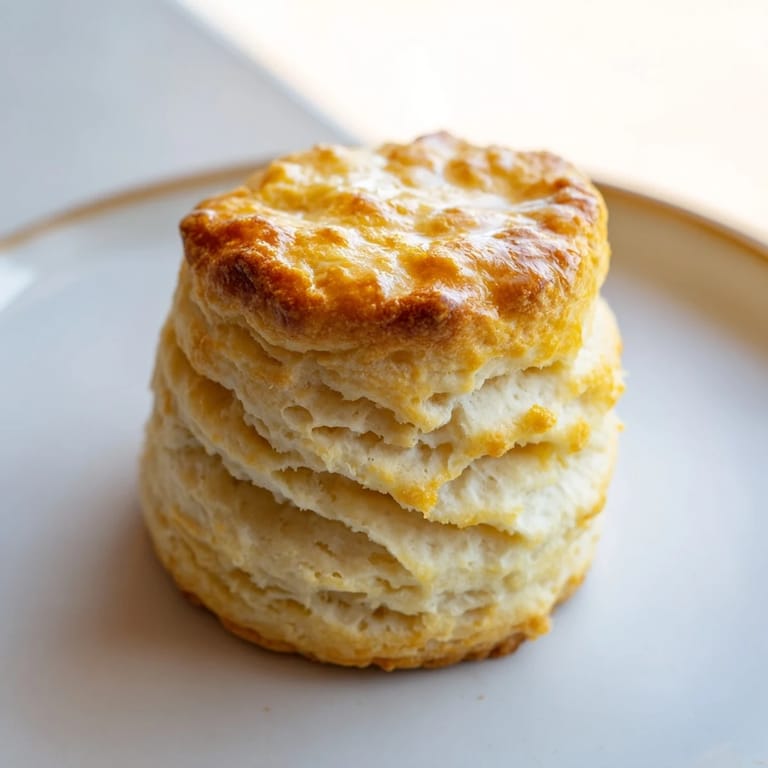
 My grandmother's kitchen always smelled like butter and buttermilk when she was preparing for Sunday breakfast, and I'd watch from the counter as her weathered hands folded and pressed the dough with practiced patience. Years later, I realized those tall, golden biscuits weren't just breakfast—they were her way of saying she had time for us. Now when I make them, I chase that same feeling: the way cold butter sizzles when it hits hot oven air, the crack of a freshly baked top, that steam that escapes when you break one open.
I made these for the first time in my tiny apartment kitchen on a Saturday morning when a friend called asking if I could feed her family before a road trip. I had no idea if they'd work, but something about the way the dough came together so quickly gave me confidence. Three hours later, she texted me a photo from the car—all the biscuits were gone, and her kids were already asking when she could come back.
Ingredients
- All-purpose flour (2 cups): This is your foundation, and room-temperature measuring matters more than you'd think—spoon it in and level it off rather than scooping directly from the bag.
- Baking powder (1 tablespoon): The rising agent that gives biscuits their height; don't skip it or double it without reason.
- Baking soda (½ teaspoon): Works with the buttermilk to create lift and a slight tang.
- Fine sea salt (1 teaspoon): Enhances flavor in a way that table salt simply won't.
- Granulated sugar (1 tablespoon): A small amount feeds the yeast activity and adds subtle sweetness.
- Cold unsalted butter (½ cup, cubed): This is non-negotiable—it must be cold enough that you can see distinct pieces in the final mixture, which creates pockets that steam and turn into layers.
- Cold buttermilk (¾ cup, plus extra for brushing): The acid in buttermilk reacts with baking soda and creates tender crumb; keep it cold right until you pour it in.
Tired of Takeout? 🥡
Get 10 meals you can make faster than delivery arrives. Seriously.
One email. No spam. Unsubscribe anytime.
Instructions
- Heat your oven and prep:
- Set the oven to 220°C (425°F) and line a baking sheet with parchment paper. You want everything ready before you touch the dough so it stays cold.
- Combine dry ingredients:
- Whisk flour, baking powder, baking soda, salt, and sugar in a large bowl until they're evenly mixed. This distributes the leavening agents so every biscuit rises consistently.
- Cut in the butter:
- Add cold, cubed butter and work it in quickly using a pastry cutter, two forks, or your fingertips—you're aiming for a mixture that looks like coarse breadcrumbs with pea-sized butter pieces still visible. The residual cold butter creates steam pockets as it bakes, giving you those gorgeous flaky layers.
- Bring the dough together:
- Make a well in the center, pour in cold buttermilk, and stir gently with a fork until the dough just comes together. Stop here—overmixing develops gluten and makes your biscuits tough instead of tender.
- Fold for flakiness:
- Turn the dough onto a lightly floured surface and gently pat it into a rectangle about ½ inch thick. Fold it in half, pat it out again, and repeat two more times—this lamination builds those beautiful layers.
- Cut your biscuits:
- Pat the dough to a final thickness of 1 inch and cut straight down with a 2½ inch round cutter without twisting (twisting seals the edges and prevents them from rising properly). Gather scraps and cut again as needed.
- Prepare for baking:
- Place biscuits close together on your prepared baking sheet and brush the tops lightly with buttermilk for color and slight richness.
- Bake until golden:
- Bake for 13–15 minutes until the biscuits are tall and deeply golden brown. You'll know they're ready when the edges are crisp and the tops sound hollow when tapped.
- Cool and serve:
- Let them cool for just a few minutes before eating—warm biscuits are when they're at their absolute best.
 Pin it
 I remember my neighbor knocking on my door one winter morning because she smelled the biscuits baking and couldn't resist. We ended up at the kitchen table with hot coffee and butter melting into warm biscuits, talking about everything and nothing until the afternoon light shifted across the floor. That's when I understood that the best recipes are the ones that stop people in their tracks.
Texture and the Science Behind It
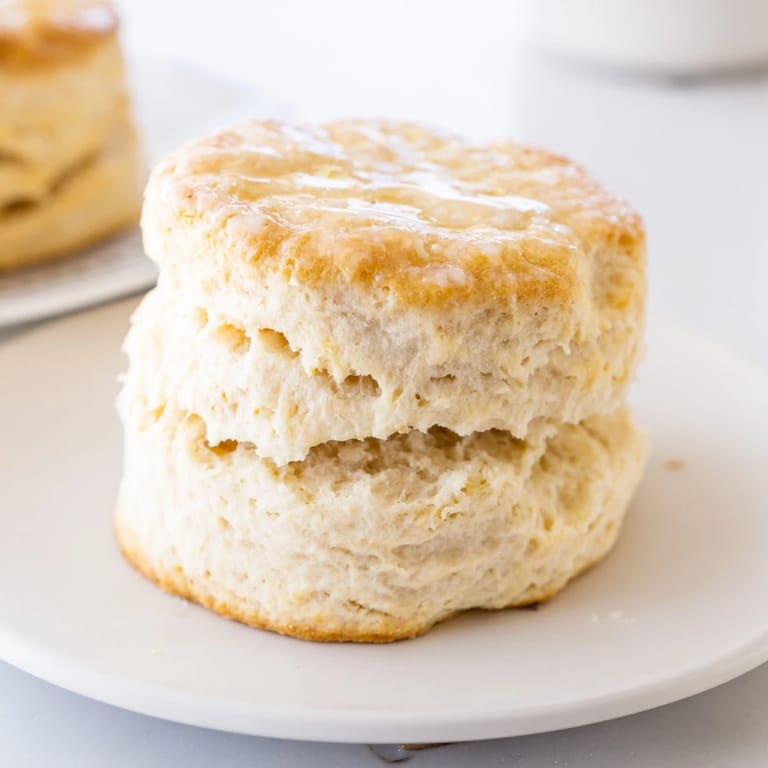
The magic of a truly flaky biscuit lives in the contrast between those crispy, shattered exterior layers and the tender, almost cloud-like interior. This happens because of two things working together: the cold butter creates steam pockets as it melts during baking, and the folding technique stacks thin layers of dough on top of each other. Think of it like building something delicate on purpose.
Flavor Variations Worth Trying
The base recipe is perfect on its own, but once you understand how it works, you can play with additions without breaking anything. I've made herbed versions with fresh thyme and chives mixed into the dry ingredients, sharp cheddar biscuits for breakfast sandwiches, and even a batch with cracked black pepper for people who wanted something less sweet. The structure stays the same—what changes is what you fold in before the buttermilk.
Making These Ahead and Storage
You can prepare the dough the night before, wrap it in plastic wrap, and refrigerate it until you're ready to cut and bake—the cold actually helps with flakiness. If you have biscuits left (which is rare), wrap them loosely in a paper towel and store at room temperature for a day or two, then warm them gently in the oven. Frozen unbaked cut biscuits can go straight from the freezer into the oven with an extra minute or two of baking time.
- A homemade buttermilk substitute (¾ cup milk plus 2 teaspoons lemon juice or vinegar, let sit 5 minutes) works perfectly if you don't have buttermilk on hand.
- Serve with honey, jam, gravy, fried chicken, or just good butter—these biscuits are flexible enough to be breakfast, lunch, or dinner.
- If you don't have a biscuit cutter, a clean glass or small jar works just fine.
 Pin it
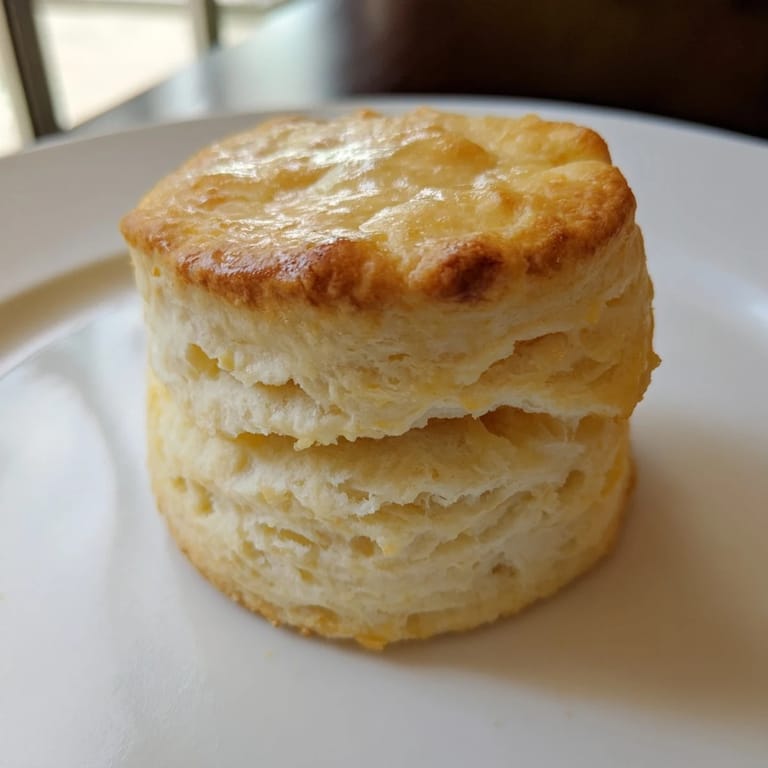
 Biscuits are one of those recipes that reward patience and practice without demanding perfection. Make them a few times, feel how the dough responds to your hands, and soon you'll have the kind of muscle memory that lets you make them without thinking—which is exactly when they taste best.
Recipe FAQ
- → What makes these biscuits so flaky?
The folding technique during dough preparation creates multiple layers, resulting in a tender, flaky texture when baked.
- → Can I substitute the buttermilk?
Yes, mixing milk with lemon juice or vinegar and letting it sit for 5 minutes can replace buttermilk effectively.
- → How can I add more flavor to the biscuits?
Incorporate grated cheddar, fresh herbs, or a pinch of black pepper into the dough for an enhanced taste.
- → What is the best way to cut the biscuits?
Use a 6 cm round cutter, pressing straight down without twisting, to ensure the biscuits rise well.
- → How should I store leftovers?
Keep leftover biscuits in an airtight container at room temperature for up to two days or freeze for longer storage.